
Columbus never achieved his goal but we celebrate the outcome of his failure.
Columbus was obsessed with finding a westward route to Asia from Spain. Finding it would enrich not only his Spanish patrons, primarily Queen Isabella, but himself as well.
Columbus attempted and failed four times to find a westward route to Asia. On his first voyage in 1492 he failed to find a route to Asia but found North America. His second and third voyages were likewise failures but nonetheless led to his discovery of South America.
And on his fourth and final voyage in 1502 he crashed on a Central America beach. The site where Columbus ended his sailing career is where centuries later mankind would dig the Panama Canal providing ships the westward route to Asia Columbus set out to find.
Columbus failed to sail westward to Asia but succeeded in discovering North, South and Central America.
Like Columbus, I experienced an unexpected benefit from a failure.
As a controller at Motorola, I set out in 1986 to discover a more accurate cost management system to support Six Sigma. I discovered Activity Based Costing (ABC) but failed to convince Motorola senior management to implement it. So I resigned from Motorola and became an entrepreneur. I started an ABC software, consulting and training company, ICMS, Inc., in 1988. And in 2016 I’m still helping companies improve their cost systems 29 years later!
Moral of the Story
When your intentions are good, the outcome is usually positive, although not always specifically what you set out to achieve.
But when your intentions are evil, bad or self-centered, none of the results are ever good.
I believe Columbus would be shocked to know that we created a national holiday to celebrate what he considered a failure.
What outcomes of failure do you celebrate personally or professionally?
]]>
We can chuckle at the cartoon, but its message is profound.
During my recent speech to the Dallas-Fort Worth Institute of Management Accountants, I alerted them that their career competitors are no longer accountants that you can outrun or outwork. Robots, Siri-type Artificial Intelligence (AI) devices and computer algorithms have entered the accounting profession. They are the three bears who want to eat your career for lunch.
The movement away from people and towards the use of robots, AI and algorithms is already taking place in several professions:
- Robots … called ATM’s … have eliminated thousands of entry level bank teller jobs.
- Salesforce announced September 19, 2016, they are embedding Artificial Intelligence into their software at a cost of $700 million. AI will enable Salesforce to guide sales staff to the most likely customers. AI will enable companies to simultaneously increase sales while reducing the size of their sales force through AI-enabled productivity improvements.
- QuickBooks software has eliminated thousands of bookkeeping jobs in the past ten years.
- Law firms have eliminated lawyers by using algorithms to search pretrial documents scanned into the firm’s computer. Deloitte-Touche shared with the audience at my speech that they are using algorithms instead of accountants to search energy law documents and legislation.
What competitor is the bear chasing your business or career? Who should you be focusing on to beat in 2017? What’s your strategy and plan to outrun the bears.
If you need someone to help you identify your competition and a strategy to beat them, email TomPryor@icms.net .

“Only the unprepared are afraid.“ Peyton Manning
That was Peyton’s response when asked “Are you nervous before you speak to a large crowd?”
I was not fearful or nervous before my speech last night for the Dallas-Fort Worth Institute of Management Accountants. The title I chose for my talk was Rich Accountant, Poor Accountant.
Here’s how I prevent speech fright:
- I share my own stories to minimize fear. I know the stories are true because I was in it. Last night to emphasize the positive impact mentoring has on both the mentor and the mentee, I shared my experiences mentoring prison inmates on developing their business plans.
- I prepared 10 PowerPoint slides for the 50-minute talk. Any more than that and I would have fear of running over my time allotment.
- I timed a trial run of my talk in my home office a couple days before the event. My experience doing a dry run by myself is that I talk 50% faster by myself than in front of an audience. I timed myself at 33 minutes by myself. When I delivered the talk last night it ran 50 minutes. Perfecto!
Someone asked pastor Chuck Swindoll how long it took to write Sunday’s sermon. Chuck replied, “Forty years.”
How long did it take me to write Rich Accountant, Poor Accountant? Forty years. How long to deliver it without fear? 50 minutes.
]]>
“I wish there was a Waze app for navigating my business and career.“
When driving I use the Waze app on my cell phone because:
- It offers me alternative routes to my desired destination.
- It routes me around unexpected obstacles, like accidents.
- It re-routes me to my desired destination if I make a wrong turn or mistake.
Someone recently asked “Is there something like Waze for my business?”
I answered “Yes, there are three versions. Mentor, coach or business advisor.”
Instead of you looking at a screen they look you in the eyes. A mentor, coach or business advisor ask great questions. They listen. They help you decide.
Like Waze, these three business applications offer alternative routes to your desired business or career destination. And using their personal experience, skills and wisdom, a mentor, coach or business advisor guides you away from obstacles and picks you up when you’ve made a mistake.
If you or your business needs a Waze, download me at TomPryor@icms.net .
]]>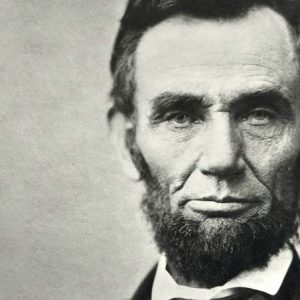

President Dwight Eisenhower and President Abraham Lincoln share something unusual in common. Neither had the support of family or friends when they ran for president.
No one in Lincoln’s family voted for him. And no one in Eisenhower’s home town of Denison, Texas voted for him. Though both lacked the moral support of family and friends, both won their presidential elections.
Lincoln and Eisenhower’s situations reminded me of something I learned decades ago.It’s more difficult for you to win over family and friends than the general public. A pastor was the first to warn me of this. He explained, “Your family remember how you acted before you became a follower of Jesus Christ. They’re going to be skeptical that you can change.”
The same attitude is often exhibited by your boss. “You can’t have any good ideas. You work for us.”
Good news! Lack of support from family, friends or bosses does not dictate your fate!
Lincoln and Eisenhower won because they sold big ideas not themselves. Lincoln promoted the end of slavery. Eisenhower promised to stand up to the communists as commander-in-chief.
Are you feeling like no one believes in you? Learn from Lincoln and Eisenhower. Identify something bigger than yourself. Something of importance that will add value to lots of people. The acceptance and appeal of that one big idea will raise your measure in everyone’s eyes.
My story
In 1985 a senior leader from Motorola HQ stopped me in mid-presentation, looked at my boss and said, “Don’t include anyone from accounting at quarterly operational reviews in the future. I only want to hear from people who can improve results, not report them.”
The leader did not believe in me. I could have gotten mad. Or I could have quit. But instead I sought out a better way to account for costs and improve decision-making. I found it. It was new. It’s called Activity-Based Costing (ABC). Finding and implementing that improved method resulted in Motorola’s leadership offering me a promotion in 1986. I turned it down, however, because my finding ABC opened even better career opportunities.
Your story
Find and promote something bigger than yourself and then people will believe in you.
]]>
“Competitive advantage is now based on what you know rather than what you own.” Mary Adams
Have you noticed that your customers, your boss, your co-workers, your friends and your family all share something in common? They all value what you know, not what you own.
If you’re a plumber, the customer values your ability to identify the root cause of their water leak. They don’t value your new truck or tools.
If you’re a family business advisor, the customer values your questions and how they lead to answers that improve their situation. They don’t value your laptop or new website.
If you’re an employee, your boss and co-workers value you saying “I’ve seen this situation before, so here’s what I recommend we do.”
If you’re a manufacturer, your customers value your knowledge of the requirements of their business and industry, not your new ERP system or robots.
Or if you’re a church music minister, the pastor values your knowledge of the Bible and how you chose the perfect songs to support their sermon topic, not your new keyboard.
What is the “Trigger” for someone to call you? It’s what you know, not what you own.
]]>
What’s your daily nut to crack?
That’s a question I often ask business owners.
What I’m searching for is, “How much do you need to sell today to break-even?” Fixed costs are the shell. Inside the shell are tasty profits.
Break-even is sales revenue number your business must surpass to make a profit.
Most business owners don’t know the answer to my question off the top of their head. But I help them identify the number using their business’ Profit & Loss report. After we identify the nut, business owners rarely forget it.
It may sound complicated, but it’s not. Break-even analysis lets you know how many hamburgers, stampings, books, or hours of consulting you must sell each day in order to cover your costs.
The formula for Break-even = Fixed Cost/Gross Profit.
For example, if the daily fixed cost to operate a business is $500 and the average Gross Profit percent is 25%, the daily nut to break-even is $500/.25 = $2,000 . You’ve got to sell $2,000 every day to cover fixed costs before you make a profit.
Why do I ask, “What’s your daily nut?”
- It’s a good conversation starter.
- The answer is useful.
- Helping a business owner answer the question is a simple way I can help.
- The bigger the nut, the more stress to crack it.
- Knowing your break-even is a key part of any good business plan.
Knowing your daily nut is practical wisdom. The wisdom to answer “What’s your daily nut?” with a sales number and to act rightly is distinctly practical.
If you have questions on how to define your daily nut, email TomPryor@icms.net .
]]>
Good ideas don’t always spread.
Wilt Chamberlain was a great basketball player but terrible free throw shooter. The average NBA player shoots 75%. Wilt made only 51% of his foul shots over his 14 year NBA career. The 1961-62 season, however, was different.
During the 1961-62 season someone taught Wilt how to shoot free throws underhanded. The underhanded shot (see picture above) was softer and more consistent than the traditional way of holding the ball above the waist.
Using the underhanded “Granny Shot” resulted in Wilt making 28 of 32 free throws during his record setting 100 point game March 2, 1962.
But Wilt stopped shooting free throws underhanded the following year.
The reasons why Wilt stopped shooting foul shots underhanded are the same reasons why accountants stopped using Activity-Based Costing.
Activity-Based Costing (ABC) is a best-practice method defined during the 1980’s. It’s based on a simple principle: “Activities consume costs & Products consume activities”. I was blessed to be director of the research project that gave birth to ABC.
Activity-Based Costing was successfully implemented and used by such notable companies as UPS, Federal Express, Ralston Purina, and Chrysler beginning in the 1990’s to improve decision-making and profit. Yet ABC is rarely taught in college or used by companies in 2016.
The reasons why Wilt abandoned the underhand free throw are the same root causes why Activity-Based Costing is rarely used:
- Wilt was willing to change but not transform his technique. Change is often successful but soon abandoned. Transformation is permanent. Wilt’s change to underhanded foul shots ended after one year. Rick Barry, however, transformed his foul shooting entirely to underhanded for his career, resulting in a 89% lifetime free throw average..
- Accountants were willing to try Activity-Based Costing pilot projects but not transform the company costing system. The results of ABC projects from 1990-2000 were overwhelmingly favorable. But few companies transformed their costing systems to ABC.
- Wilt was not required to shoot underhanded by leadership. Even though competition frequently fouled Wilt because of his poor free throw results, neither his coach or team owner pressed him to change. A task of leadership is to create an alignment of strengths in ways that make our weaknesses irrelevant. Shooting foul shots underhanded made Wilt’s weakness irrelevant, but his coach did not make him continue in his strength.
- Accountants were not required by the CEO, CPA or IRS to convert to Activity-Based Costing. Even though ABC pilot projects consistently demonstrated more accurate and understandable cost reporting. The majority of CEO’s moved their attention from ABC to the next hot topic promoted by consultants or trade journals.
- Wilt had a high threshold of collective behavior. He refused to change unless most every other player in the league shot underhanded. Wilt was willing to abandon a better method in exchange for conforming to the majority of players. Rick Barry had a low threshold. He was willing to be a loner if the outcome was positive. Not so with Wilt.
- Accountants have a high threshold of collective behavior. By nature, accountants are conformists. If the majority of accountants and accounting software products don’t use Activity-Based Costing, then neither will they. Marketing professionals have a low threshold. They are by nature non-conformists.
Being underhanded is bad. Shooting underhanded is good. Both in the game of basketball and the profession of cost accounting.
To learn more about Activity-Based Costing CLICK HERE. To request a free evaluation of your cost system CLICK HERE.
]]>
Budgets are boring. They’re easy to create. Simply take last year’s spending and multiply it by an inflation factor or an across-the-board budget cut percent. Voila, you’ve got a budget.
Easy activities rarely determine an organization’s success. Creating a budget is relatively easy and not mission critical.
Strategy is mission critical. Strategy determines success or failure. Yet leaders spend far less time on strategy than on budgets.
During my 20+ years in consulting, I’ve seen many budgets but few strategic plans.
If you need to excite yourself and your “troops”, there are two steps that must take place before the budget.
Step 1: Strategy
If you’re satisfied with the way things are, then you don’t need a strategy. Just keep do’in what you’ve been do’in.
But if you’re not satisfied with this year’s results, then you’ve got to implement change. What do you change? That’s determined by your strategy.
A strategy is what you intend to do differently to win in the marketplace.
I focus on strategies that fall into one of three categories:
1. Focus on being unique. Define a niche for your existing products or services. Complete the sentence “We are the only organization that _____________.” Author Doug Hall says “If you’re not unique, you’d better be cheap.” Zipcode Honey or Texas Organic Lawncare are examples of niche strategies.
2. Focus on being the best. Provide what your competition does but more efficiently and effectively. If you’re a baker, make sure your cake tastes better than anyone else. If you want to make it unique, fine, but you’ve got to deliver the best quality. Amazon.com and Google are examples of companies whose strategy is to be the best retailer or search engine.
3. Focus on invention. Identify a new customer need and satisfy it with something you invent. Possibly the customer doesn’t even know they have the need. Facebook or Apple are examples of companies whose strategy is to invent social media or smartphones customers didn’t know they wanted.
Step 2: Plan
Define a 1-page plan to implement the new strategy. For an example of a 1-page plan CLICK HERE.
To be successful, a strategy must have a written, doable sequence of activities to achieve a distinct, measurable goal. And to be successful, the plan must be communicated to all employees.
Step 3: Budget
Unfunded plans fail. Create a budget that financially supports implementation of the plan.
A budget is the last step to success, not the first.
It does not require a PhD to predict that technology has and is going to continue to significantly change our corporate and personal life. Peter Diamandis, author of Abundance: the future is better than you think, recently asked readers “What do you believe won’t change over the next two decades?”
One thing that won’t change in the next 20 years is the proven sequence of strategy, plan and then budget.
]]>
“People are far more interested in what works than what’s true.”
This quote by Andy Stanley reminds me of my college macro-economics professor.
Professor Hayashi repeatedly said, “In theory, this is how the market is supposed to work.”
My professor taught what was true but failed to tell me what works. He taught sound theory. He drew investment curves and mathematical equations to demonstrate when interest rates drop, borrowing and investment increase.
In theory, that is true. But it did not work following the Great Recession of 2008. Business investments, jobs and GDP did not grow, even with the Federal Reserve offering zero interest to banks.
What works to bring an economy out of recession? Entrepreneurship, a word Prof. Hayashi never mentioned in class or in my textbook.
What’s true can be what works, but it’s frequently not. I’ve learned over the past 60+ years that what works and what’s true are often diametrically different. Here are some examples:
- It’s true that having a high FICO score can make borrowing money easier. What works is spending less than you make to stay out of debt.
- It’s true annual performance reviews can identify an employee’s strengths and weaknesses. What works are daily coaching sessions where your manager simply asks “What are you working on? Do you need any help?”
- It’s true that memorizing answers will get you an “A” on school exams. What works to achieve success in life is learning how to ask great questions.
- It’s true most business text books recommend every business have a detailed strategic plan. What works is a 1-page plan because it’s easier to create, communicate and change.
- It’s true that it’s good to follow your passion. What works is following opportunity. There are 5.8 million opportunities (jobs openings) in America in 2016. Don’t follow your passion, but bring it with you to the opportunities that present themselves.
Andy Stanley’s primary point in making the statement that opened this blog is this: Virtually no one that attends his church is on a truth quest. Instead, they are on a quest for what will work for them to make them happy, at peace and successful.
What truth have you experienced that does not work in your personal or professional life?
]]>