
The primary desire of family business advisors, like myself, is to see family-owned businesses live on for many generations. But some family businesses are beyond saving and want to die peacefully.
Those businesses need hospice.
Hospice is a service and philosophy of care for terminally ill patients. Hospice has four primary goals:
- Relieve the pain and suffering of the terminally ill;
- Make possible a “good” death;
- Help the family; and,
- Assist in the search for meaning.
While best known for helping a terminally ill person and their family, there’s a growing need to extend hospice to terminal family-owned businesses.
Terminal family businesses can be characterized as having one or more of the following situations:
- The next generation has no interest in continuing the family business. Less than 40% of first to second generation hand-offs are successful. Less than 15% of second to third generation hand-offs survive.
- The siblings of the next generation dislike one another, don’t talk to one another, don’t trust one another, refuse to work together, and/or refuse to define a unity strategy. I recommend Doug Box’s new book Texas Patriarch for an actual, first-hand account of what happens in a wealthy family that can’t get along with one another.
- The business has outdated products and processes, serving a declining market and customer base, with little or no hope of change or improving. I’m not just talking about buggy whips. I’m talking about examples such as Uber grabbing the taxi market.
- The family lacks the will, ability or initiative to turn around their bleedingbusiness and seek to sell the body to someone. Most family business owners have over 75% of their retirement money tied up in the business. They need a way to cash-out.
A hospice story
Certified family business advisors are trained and equipped to provide hospice-type services. Lisë Stewart, founder and president of Galliard Family Advisor Institute, recently shared a hospice-type story.
A third generation family member asked Lisë to go with him to meet with his grandfather and father. She asked “Why?” He replied, “I need your support when I tell them that I have no interest or intention of joining the family business.” That’s an example of family business hospice care.
Is your family business in need of hospice? I’m ready, willing and able.
]]>
Columbus never achieved his goal but we celebrate the outcome of his failure.
Columbus was obsessed with finding a westward route to Asia from Spain. Finding it would enrich not only his Spanish patrons, primarily Queen Isabella, but himself as well.
Columbus attempted and failed four times to find a westward route to Asia. On his first voyage in 1492 he failed to find a route to Asia but found North America. His second and third voyages were likewise failures but nonetheless led to his discovery of South America.
And on his fourth and final voyage in 1502 he crashed on a Central America beach. The site where Columbus ended his sailing career is where centuries later mankind would dig the Panama Canal providing ships the westward route to Asia Columbus set out to find.
Columbus failed to sail westward to Asia but succeeded in discovering North, South and Central America.
Like Columbus, I experienced an unexpected benefit from a failure.
As a controller at Motorola, I set out in 1986 to discover a more accurate cost management system to support Six Sigma. I discovered Activity Based Costing (ABC) but failed to convince Motorola senior management to implement it. So I resigned from Motorola and became an entrepreneur. I started an ABC software, consulting and training company, ICMS, Inc., in 1988. And in 2016 I’m still helping companies improve their cost systems 29 years later!
Moral of the Story
When your intentions are good, the outcome is usually positive, although not always specifically what you set out to achieve.
But when your intentions are evil, bad or self-centered, none of the results are ever good.
I believe Columbus would be shocked to know that we created a national holiday to celebrate what he considered a failure.
What outcomes of failure do you celebrate personally or professionally?
]]>
We can chuckle at the cartoon, but its message is profound.
During my recent speech to the Dallas-Fort Worth Institute of Management Accountants, I alerted them that their career competitors are no longer accountants that you can outrun or outwork. Robots, Siri-type Artificial Intelligence (AI) devices and computer algorithms have entered the accounting profession. They are the three bears who want to eat your career for lunch.
The movement away from people and towards the use of robots, AI and algorithms is already taking place in several professions:
- Robots … called ATM’s … have eliminated thousands of entry level bank teller jobs.
- Salesforce announced September 19, 2016, they are embedding Artificial Intelligence into their software at a cost of $700 million. AI will enable Salesforce to guide sales staff to the most likely customers. AI will enable companies to simultaneously increase sales while reducing the size of their sales force through AI-enabled productivity improvements.
- QuickBooks software has eliminated thousands of bookkeeping jobs in the past ten years.
- Law firms have eliminated lawyers by using algorithms to search pretrial documents scanned into the firm’s computer. Deloitte-Touche shared with the audience at my speech that they are using algorithms instead of accountants to search energy law documents and legislation.
What competitor is the bear chasing your business or career? Who should you be focusing on to beat in 2017? What’s your strategy and plan to outrun the bears.
If you need someone to help you identify your competition and a strategy to beat them, email TomPryor@icms.net .

“Only the unprepared are afraid.“ Peyton Manning
That was Peyton’s response when asked “Are you nervous before you speak to a large crowd?”
I was not fearful or nervous before my speech last night for the Dallas-Fort Worth Institute of Management Accountants. The title I chose for my talk was Rich Accountant, Poor Accountant.
Here’s how I prevent speech fright:
- I share my own stories to minimize fear. I know the stories are true because I was in it. Last night to emphasize the positive impact mentoring has on both the mentor and the mentee, I shared my experiences mentoring prison inmates on developing their business plans.
- I prepared 10 PowerPoint slides for the 50-minute talk. Any more than that and I would have fear of running over my time allotment.
- I timed a trial run of my talk in my home office a couple days before the event. My experience doing a dry run by myself is that I talk 50% faster by myself than in front of an audience. I timed myself at 33 minutes by myself. When I delivered the talk last night it ran 50 minutes. Perfecto!
Someone asked pastor Chuck Swindoll how long it took to write Sunday’s sermon. Chuck replied, “Forty years.”
How long did it take me to write Rich Accountant, Poor Accountant? Forty years. How long to deliver it without fear? 50 minutes.
]]>
“I wish there was a Waze app for navigating my business and career.“
When driving I use the Waze app on my cell phone because:
- It offers me alternative routes to my desired destination.
- It routes me around unexpected obstacles, like accidents.
- It re-routes me to my desired destination if I make a wrong turn or mistake.
Someone recently asked “Is there something like Waze for my business?”
I answered “Yes, there are three versions. Mentor, coach or business advisor.”
Instead of you looking at a screen they look you in the eyes. A mentor, coach or business advisor ask great questions. They listen. They help you decide.
Like Waze, these three business applications offer alternative routes to your desired business or career destination. And using their personal experience, skills and wisdom, a mentor, coach or business advisor guides you away from obstacles and picks you up when you’ve made a mistake.
If you or your business needs a Waze, download me at TomPryor@icms.net .
]]>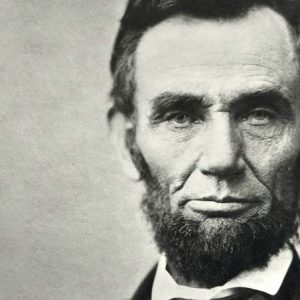

President Dwight Eisenhower and President Abraham Lincoln share something unusual in common. Neither had the support of family or friends when they ran for president.
No one in Lincoln’s family voted for him. And no one in Eisenhower’s home town of Denison, Texas voted for him. Though both lacked the moral support of family and friends, both won their presidential elections.
Lincoln and Eisenhower’s situations reminded me of something I learned decades ago.It’s more difficult for you to win over family and friends than the general public. A pastor was the first to warn me of this. He explained, “Your family remember how you acted before you became a follower of Jesus Christ. They’re going to be skeptical that you can change.”
The same attitude is often exhibited by your boss. “You can’t have any good ideas. You work for us.”
Good news! Lack of support from family, friends or bosses does not dictate your fate!
Lincoln and Eisenhower won because they sold big ideas not themselves. Lincoln promoted the end of slavery. Eisenhower promised to stand up to the communists as commander-in-chief.
Are you feeling like no one believes in you? Learn from Lincoln and Eisenhower. Identify something bigger than yourself. Something of importance that will add value to lots of people. The acceptance and appeal of that one big idea will raise your measure in everyone’s eyes.
My story
In 1985 a senior leader from Motorola HQ stopped me in mid-presentation, looked at my boss and said, “Don’t include anyone from accounting at quarterly operational reviews in the future. I only want to hear from people who can improve results, not report them.”
The leader did not believe in me. I could have gotten mad. Or I could have quit. But instead I sought out a better way to account for costs and improve decision-making. I found it. It was new. It’s called Activity-Based Costing (ABC). Finding and implementing that improved method resulted in Motorola’s leadership offering me a promotion in 1986. I turned it down, however, because my finding ABC opened even better career opportunities.
Your story
Find and promote something bigger than yourself and then people will believe in you.
]]>I asked my boss, the CFO, “Why does Marty always seem to question Mr. Taylor? Is Marty not a team player?”
John replied “That’s what Taylor wants Marty to do. Taylor does not want everyone to immediately agree with everything he proposes. He wants to make sure he and everyone on the leadership team understand the pros and cons of every issue or idea before implementing change.”
The Dangers of Autonomy
It is common for leaders to yearn for autonomy. Autonomy is defined as having the independence and freedom to do what you want. Our president wanted autonomy BUT not too much.
In “The Dangers of Autonomy” podcast, Andy Stanley discusses the dangers of autonomy.
- Autonomy leads to isolation. Too much autonomy leads to being a Lone Ranger without a Tonto.
- Autonomy, power and wealth are intoxicating.
- Isolated people, like intoxicated people, make bad decisions.
- Autonomous leaders use relationships as a means to an end. Autonomous people have hundreds of LinkedIn connections but no close friends.
Autonomy is Prevalent in Family-Owned Business
While autonomy can be found in the CEO’s office of any size and type of organization, including churches, autonomous leaders are prevalent in family-owned businesses. Why? Because the 1st generation founder often started the business alone and became used to making decisions in isolation. I know. I was one.
Also, a family-owned business leader is commonly surrounded by people who get a paycheck from him/her. Some are family members. Not wanting to offend the hand that pays them, the leader may be farther down the road to autonomy than they may realize. A road without guardrails is often dangerous.
In larger businesses a leader’s autonomy and power becomes intoxicating to the people around them. If people need you for a paycheck, they more often than not tell you what you want to hear, not what you need to hear.
Case in point: Howard Shultz, CEO of Starbucks, March 2015. Shultz likely came up with the idea to put #RaceTogether on cups to initiate conversations with customers about race relations in America. It is likely that no one reporting to Shultz felt comfortable telling him “That’s not a good idea”. Instead, Starbuck’s customers told him it was not a good idea. Shultz yanked the promotion a couple of days after inception.
Do you have a trusted someone who questions your autonomy?
Every emperor needs someone who is willing to say “You’re not wearing clothes!”
If you don’t have at least one person who will question your autonomy, here are some ideas to consider:
- Ask your spouse his/her opinion. I value my wife’s intuition and common sense more than gold. She often asked me questions about an issue that I had never considered.
- Hire confident, strong-willed people. It’s counter-intuitive, but leads to good decision-making. Two of my best hires at president of ICMS, Inc. were Christine Nola and Julie Sahm. Both challenged my ideas, my plans and my writing at all the appropriate times.
- Use a family business advisor as a mentor. Choose someone that asks insightful questions. Submit your financial statements … the blood test of a business … to your mentor for review and questioning.
- Form a small advisory board of people whom you value and respect their opinion. Advisory boards typically meet 2-4 times per year to answer and ask questions of the business owner. Joining The Alternative Board (TAB) or CEO Institute is another option for controlling autonomy.
- Ask employees, your banker or your mentor “What DON’T you like about my plan?” This question opens the door for them to say something negative. If you simply ask “Do you like my idea?” they’ll likely say “yes” because they believe you are seeking adulation, not consultation.
- Seek out and meet quarterly with a business school dean or college professor. They are adept at asking questions. They can also be a valuable resource of research and future employees.
- Hire Marty.
The doctor who has himself as his doctor … has a lousy doctor.
The truth is … we all do better when we are watched. If we know someone is observing us, checking on us, and noting our progress, we tend to perform better.
Wise King Solomon said “Plans fail for lack of counsel, but with many advisers they succeed.”
Autonomy is a desired trait for business leaders but not in excess.
]]>Like us, the participants of the very first Thanksgiving had misgivings. The 52 English colonists were apprehensive about their new life, health and safety in Plymouth. And the 90 Wampanoag natives were in fear of losing their land and their way of life to the new people with guns. But unknown to most of us, the Pilgrims and Indians provided us a 1621 recipe for converting our 2002 misgivings into a thanksgiving.
Over a period of ten months the Indians and Pilgrims laid aside their misgivings with two acts of giving. The Indians were first to act, offering seeds and farming knowledge to the Pilgrims. “On March 16, 1621, the English had a surprise visit from Samoset, a leader from the Abenaki people to the north. Samoset brought Tisquantum (often called Squanto).” (2)Squanto lived with the English for six months, giving them his knowledge how to grow corn and use fish to fertilize the fields.
Before knowing whether the plantings would produce a harvest, the Pilgrims had a desire to give the Indians and their leader Massasoit gifts. “In early summer, William Bradford sent Edward Winslow and Stephen Hopkins to Pokanoket, the Wampanoag village where Massasoit lived. They brought gifts to Massasoit.” And “as was customary, they also paid him honor by shooting their muskets in a salute.” (2)
For the Wampanoag natives that joined the English colonists in the autumn of 1621 to share food and fellowship, giving thanks was not a once a year event. “Since long before the arrival of Europeans, the Wampanoag had celebrated festivals of thanks that took place at particular times of the year, including the “Strawberry Thanksgiving” and the “Green Corn Thanksgiving.” (2)
How can you and I enjoy a more frequent bountiful harvest? Like the Indians and Pilgrims of 1621, our first activity must be one of giving. I’ve read three new books that provide new insights on giving:
- The One Minute Millionaireby Mark Hansen and Robert Allen. “Properly adding a million dollars to your net worth is a primary objective of this book. Yet to obtain this you must first give. This is one of the Enlightened Millionaire’s paradoxes. On one level this makes no logical sense. How can someone give before someone gets? This is not possible using ordinary logic. Yet on the meta level, that is exactly what happens.” (3) Becoming a millionaire is not instinctive. The process is not logical. “Enlightened Millionaires donate the first 10% of all their incomes to the charities and/or churches in their communities. This giving multiplies prosperity a thousand fold. It worked for John D. Rockefeller, who was a meticulous tither. Recently it worked for Oprah, who has donated at least 10% of her annual income to charity, most of it anonymously, throughout her adult life.” (3)Logic tells us that giving shrinks (100% – 10% = 90%) our wealth. In reality, giving multiplies our wealth (100% X 10% = 1,000%). To increase wealth, the authors recommend we give of our time, give our approval, give a smile, give advice, give compliments, give encouragement, give of your talent, and give attention. If you’re frustrated with your business results in 2002, don’t give employees a piece of your mind. Instead, give attention to seeds that can produce a financial harvest in 2003… Activity Based Management (ABM/ABC) training, books or software toolkit. Implementing ABM/ABC or improving an existing system will convert your 2002 misgivings into 2003 thanksgiving.
- 365 Ways to Give Thanksby Brenda Shoshanna
“When we start to give thanks continually, these gifts expand. The more we give them to others, the more we receive. The more we give thanks, the more joyous our life becomes. ” (4) If you’re stumped for giving ideas, this is a great book. Here are a few ideas from Brenda’s book:
- Put a piece of candy in the mailbox for the postman.
- Give an extra big tip to a waiter, waitress or cab driver.
- Put money in an expired parking meter.
- Offer to teach a continuing education class.
- Give movie tickets to someone who’s stuck in a rut.
- Give God daily time of prayer and Bible study.
- Organize a block party.
- Give a book that you enjoyed to a friend.
- Establish a charity box in your home or office for spare change.
- Share your faith. Tell others there is a higher purpose in life.
-
While not in Brenda’s book, here are a few of my business giving ideas:
- If you have an ABC system, share your experiences with other businesses.
- Teach a new entrepreneur or small business owner how to build their business on well-defined processes and less on people.
- Share stewardship principles with a non-believer.
- Give your boss a copy of a business book you’ve benefited from this year. Three that I particularly enjoyed in 2002 were Good to Great, The Spirituality of Successand Activity-based Cost Management: An Executive’s Guide.
- Offer a professor some time off by teaching one of their classes.
- Don’t hold your time or talent. Give it to someone who needs it.
- The Generosity Factorby Ken Blanchard and S. Truett Cathy The coauthor of The One Minute Manager and founder of Chick-Fil-A restaurants have teamed to write a short, but powerful business fiction book on the importance of giving. “There is a route to genuine and enduring satisfaction, but it flies in the face of this greedy, self-obsessed culture. It’s called generosity, and it involves freely giving our four most valuable resources – our time, talents, treasure, and touch – and receiving unimaginable riches in return.” (5) The authors practice what they teach. Ken Blanchard and his wife have established a unique corporate giving program that enables each employee to research and designate specific charities to be the recipient of a significant portion of company profits. S. Truett Cathy gives his employees every Sunday off. Even though Sunday is a big day of revenue for fast food restaurants, Chick-Fil-A is still a financial success. Employee turnover is lowest in the industry while profits are some of the highest. Everyone is blessed by their giving.
Give a little, get a little. Give a lot, get a lot. Remember this: “Whoever sows sparingly will also reap sparingly, and whoever sows generously will also reap generously. Each man should give what he has decided in his heart to give, not reluctantly or under compulsion, for God loves a cheerful giver.” (6)
The Pilgrims and Wampanoag natives had reason to gripe. But instead, they chose to give. And as a result, they reaped a Thanksgiving harvest in 1621 that we still celebrate in 2002. When someone sees a person help another, it has a ripple effect. Lay aside your misgivings. Give your family, friends, and business some of your time, talents and treasure. Do something this year to make Thanksgiving and the New Year one of great personal and professional bounty.
(1) Webster’s Dictionary, Riverside Publishing, 1984 (2) 1621: A New Look at Thanksgiving, Catherine O’Neill Grace & Margeret M. Bruchac, National Geographic Society, 2001 (3) The One Minute Millionaire, Mark Hansen & Robert Allen, Harmony Books, 2002 (4) 365 Ways to Give Thanks, Brenda Shoshanna, Birch Lane Press, 1999 (5) TheGenerosity Factor, Ken Blanchard & S. Truett Cathy, Zondervan, 2002 (6) 2 Corinthians 9:6-7 The Maxwell Leadership Bible, Thomas Nelson, 2002
]]>
“If you want to see the Rockettes, then go, but remember to leave after the Christmas Dreams number, before The Living Nativity begins. The show’s creators are wrong to assume that Jews, Muslims and other non-Christians don’t have the same right to holiday fluff that Christians do. To lure spectators of all faiths (and nonfaiths) with the promise of an entertaining holiday revue, and then to ambush them with Christian theology, is dated and borderline offensive.” (1)
It’s a Mas
Taking Christ out of Christmas leaves us a “mas”. And that’s exactly what Mark Lowry and his editor got… a mess load of letters-to-the editor, every one expressing outrage and opposition to Mark’s recommendation of cutting the Bethlehem manger scene from the Christmas show.
In defense of Mr. Lowry, he is not the first person to omit Christ from Christmas. Millions of people celebrate Christmas without acknowledging Christ. I confess that I’m guilty of using the abbreviation Xmas in years past without thinking how offensive this must have been to Jesus. And while most people say “Happy Holidays” to their co-workers as they leave December 24th, most do so without giving thought to the word’s origin… holy-days.
Inside Tips on Gift Giving
These examples of Christmas omission or ignorance gave me cause this year to examine my own life. I concluded the greatest gifts I could give this year are not external. They will be internal. I need to return what I’ve omitted and replace my ignorance with knowledge. Author of The Book of Christmas Wisdom, Criswell Freeman says, “Christmas should be a time of joy, a time of contemplation and renewal. But Christmas, like every other event in your life, is what you make it. So make this holiday season the best ever by working from the inside-out.” (2)
One of the inside-out gifts I will give this Christmas is simple but difficult for me. I don’t tell my wife, daughter or parents at the end of phone calls, “Remember, I love you.” I can come up with at least ten reasons why I haven’t (i.e. Dad didn’t do it, It’s not a macho thing to say, I don’t want other people at the airport to hear me say I Love You to the phone, etc.). All these reasons pale in comparison to the value this daily gift will bring to both the receiver and the giver.
Merry Morphing
A few Christmas’s ago, the dominant interest of six-year-olds in America was a group of teenage superheroes and their toy look-alikes called the Mighty Morphin Power Rangers. Their rallying cry in moments of crisis was “It’s morphing time!”, transforming them with the ability to do extraordinary things.
“The desire for transformation lies deep in every human heart.” (3) Morphing may be the best gift that you and I can give our family, our business and ourselves this Christmas. This holiday season is a perfect time to consider and correct omissions and ignorance in our personal or professional lives. The resulting changes could be priceless.
Merry ABC from ICMS
As we approach the beginning of our 15th year in business, the staff of ICMS wish you and yours an Activity-Based Christmas and a Value-added New Year.
(1) Fort Worth Star-Telegram, “Christmas Show is Entertaining Up Until Finale”, Mark Lowry, November 16, 2002
(2) The Book of Christmas Wisdom, Criswell Freeman, Walnut Grove Press, 1999
(3) The Life You’ve Always Wanted, John Ortberg, Zondervan Press, 2002
]]>
The value of an outsider reflects a basic truth: The closer we get to something, the less clearly we can see it. An outsider holds the page at arm’s length, and sees it as the world or your marketplace would see it. The letters get clearer. And the reader knows what he’s reading, rather than what the author intended to convey.
I am reminded of Hans Christian Andersen’s “The Emperor’s New Clothes”, a fable about the value of involving an honest outsider. The emperor was fooled into parading naked through the streets, believing himself to be dressed in magical new finery. The town elders, not wanting to embarrass the emperor, proclaimed the nonexistent clothes as beautiful. But then a young boy who had never observed an emperor before exclaimed, “The Emperor is naked.” The boy reacted honestly because he was uninhibited by experience and familiarity.
Activity Based Management (ABM) provides managers a fresh, new perspective of the “inside” cost, processes and products of their organization. But when coupled with an “outside” perspective, ABM’s value is greatly enhanced. Here are seven “outside” perspectives to consider:
- Consider employee’s perspectives.Managers should not keep ABM/ABC software reports to themselves. Teach employees the basic principles of ABM. Ask them for their honest opinions, continuous improvement ideas and product line perspectives.
- Consider other manager’s perspectives.Managers should exchange activity accounting reports. Ask each other for opinions, observations and constructive criticism. Benchmark with each other.
- Consider a consultant’s perspectives.ABM/ABC consultants have seen many, many implementations. Ask a seasoned consultant for his/her evaluation of your findings. Don’t be defensive.
- Consider a professor’s perspectives.Because most colleges now teach ABM/ABC, there are many in the academic community with ABM/ABC knowledge and perspectives. Invite a knowledgeable professor to evaluate your software model, findings and plans.
- Consider another ABM’ers perspectives.There are literally thousands of companies worldwide that have implemented ABM/ABC. Seek out and invite one or more to evaluate your findings, system and plans.
- Consider a supplier’s perspectives.Many industries have launched supply chain improvement initiatives in recent years. Most have selected ABM as the common language to identify and measure waste. Use your ABM business process reports to initiate a constructive dialogue of mutually beneficial improvements with your suppliers.
- Consider a customer’s perspectives.Your customers may have a different perspective about which activities you provide they consider value-added. Use a Bill of Activity to find out if an activity you think your customer “wants” is in fact what they define as a “need”.
One of my favorite Bible verses is Proverbs 27:6 “Wounds of a friend can be trusted”. In the fable, the Emperor was wounded by the young boy’s remark. But instead of admitting his mistake and taking corrective action, the emperor found it easier to continue his naked procession through the streets under the illusion that anyone who couldn’t see his “clothes” was incompetent. Don’t repeat the emperor’s mistake. Instead, ask a trusted friend for constructive criticism, sort through their comments and then act on their advice.
]]>