
The primary desire of family business advisors, like myself, is to see family-owned businesses live on for many generations. But some family businesses are beyond saving and want to die peacefully.
Those businesses need hospice.
Hospice is a service and philosophy of care for terminally ill patients. Hospice has four primary goals:
- Relieve the pain and suffering of the terminally ill;
- Make possible a “good” death;
- Help the family; and,
- Assist in the search for meaning.
While best known for helping a terminally ill person and their family, there’s a growing need to extend hospice to terminal family-owned businesses.
Terminal family businesses can be characterized as having one or more of the following situations:
- The next generation has no interest in continuing the family business. Less than 40% of first to second generation hand-offs are successful. Less than 15% of second to third generation hand-offs survive.
- The siblings of the next generation dislike one another, don’t talk to one another, don’t trust one another, refuse to work together, and/or refuse to define a unity strategy. I recommend Doug Box’s new book Texas Patriarch for an actual, first-hand account of what happens in a wealthy family that can’t get along with one another.
- The business has outdated products and processes, serving a declining market and customer base, with little or no hope of change or improving. I’m not just talking about buggy whips. I’m talking about examples such as Uber grabbing the taxi market.
- The family lacks the will, ability or initiative to turn around their bleedingbusiness and seek to sell the body to someone. Most family business owners have over 75% of their retirement money tied up in the business. They need a way to cash-out.
A hospice story
Certified family business advisors are trained and equipped to provide hospice-type services. Lisë Stewart, founder and president of Galliard Family Advisor Institute, recently shared a hospice-type story.
A third generation family member asked Lisë to go with him to meet with his grandfather and father. She asked “Why?” He replied, “I need your support when I tell them that I have no interest or intention of joining the family business.” That’s an example of family business hospice care.
Is your family business in need of hospice? I’m ready, willing and able.
]]>
Columbus never achieved his goal but we celebrate the outcome of his failure.
Columbus was obsessed with finding a westward route to Asia from Spain. Finding it would enrich not only his Spanish patrons, primarily Queen Isabella, but himself as well.
Columbus attempted and failed four times to find a westward route to Asia. On his first voyage in 1492 he failed to find a route to Asia but found North America. His second and third voyages were likewise failures but nonetheless led to his discovery of South America.
And on his fourth and final voyage in 1502 he crashed on a Central America beach. The site where Columbus ended his sailing career is where centuries later mankind would dig the Panama Canal providing ships the westward route to Asia Columbus set out to find.
Columbus failed to sail westward to Asia but succeeded in discovering North, South and Central America.
Like Columbus, I experienced an unexpected benefit from a failure.
As a controller at Motorola, I set out in 1986 to discover a more accurate cost management system to support Six Sigma. I discovered Activity Based Costing (ABC) but failed to convince Motorola senior management to implement it. So I resigned from Motorola and became an entrepreneur. I started an ABC software, consulting and training company, ICMS, Inc., in 1988. And in 2016 I’m still helping companies improve their cost systems 29 years later!
Moral of the Story
When your intentions are good, the outcome is usually positive, although not always specifically what you set out to achieve.
But when your intentions are evil, bad or self-centered, none of the results are ever good.
I believe Columbus would be shocked to know that we created a national holiday to celebrate what he considered a failure.
What outcomes of failure do you celebrate personally or professionally?
]]>
“Only the unprepared are afraid.“ Peyton Manning
That was Peyton’s response when asked “Are you nervous before you speak to a large crowd?”
I was not fearful or nervous before my speech last night for the Dallas-Fort Worth Institute of Management Accountants. The title I chose for my talk was Rich Accountant, Poor Accountant.
Here’s how I prevent speech fright:
- I share my own stories to minimize fear. I know the stories are true because I was in it. Last night to emphasize the positive impact mentoring has on both the mentor and the mentee, I shared my experiences mentoring prison inmates on developing their business plans.
- I prepared 10 PowerPoint slides for the 50-minute talk. Any more than that and I would have fear of running over my time allotment.
- I timed a trial run of my talk in my home office a couple days before the event. My experience doing a dry run by myself is that I talk 50% faster by myself than in front of an audience. I timed myself at 33 minutes by myself. When I delivered the talk last night it ran 50 minutes. Perfecto!
Someone asked pastor Chuck Swindoll how long it took to write Sunday’s sermon. Chuck replied, “Forty years.”
How long did it take me to write Rich Accountant, Poor Accountant? Forty years. How long to deliver it without fear? 50 minutes.
]]>
“I wish there was a Waze app for navigating my business and career.“
When driving I use the Waze app on my cell phone because:
- It offers me alternative routes to my desired destination.
- It routes me around unexpected obstacles, like accidents.
- It re-routes me to my desired destination if I make a wrong turn or mistake.
Someone recently asked “Is there something like Waze for my business?”
I answered “Yes, there are three versions. Mentor, coach or business advisor.”
Instead of you looking at a screen they look you in the eyes. A mentor, coach or business advisor ask great questions. They listen. They help you decide.
Like Waze, these three business applications offer alternative routes to your desired business or career destination. And using their personal experience, skills and wisdom, a mentor, coach or business advisor guides you away from obstacles and picks you up when you’ve made a mistake.
If you or your business needs a Waze, download me at TomPryor@icms.net .
]]>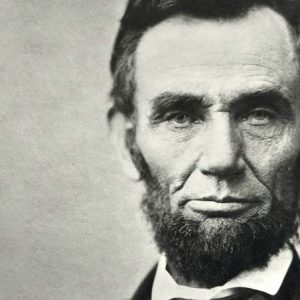

President Dwight Eisenhower and President Abraham Lincoln share something unusual in common. Neither had the support of family or friends when they ran for president.
No one in Lincoln’s family voted for him. And no one in Eisenhower’s home town of Denison, Texas voted for him. Though both lacked the moral support of family and friends, both won their presidential elections.
Lincoln and Eisenhower’s situations reminded me of something I learned decades ago.It’s more difficult for you to win over family and friends than the general public. A pastor was the first to warn me of this. He explained, “Your family remember how you acted before you became a follower of Jesus Christ. They’re going to be skeptical that you can change.”
The same attitude is often exhibited by your boss. “You can’t have any good ideas. You work for us.”
Good news! Lack of support from family, friends or bosses does not dictate your fate!
Lincoln and Eisenhower won because they sold big ideas not themselves. Lincoln promoted the end of slavery. Eisenhower promised to stand up to the communists as commander-in-chief.
Are you feeling like no one believes in you? Learn from Lincoln and Eisenhower. Identify something bigger than yourself. Something of importance that will add value to lots of people. The acceptance and appeal of that one big idea will raise your measure in everyone’s eyes.
My story
In 1985 a senior leader from Motorola HQ stopped me in mid-presentation, looked at my boss and said, “Don’t include anyone from accounting at quarterly operational reviews in the future. I only want to hear from people who can improve results, not report them.”
The leader did not believe in me. I could have gotten mad. Or I could have quit. But instead I sought out a better way to account for costs and improve decision-making. I found it. It was new. It’s called Activity-Based Costing (ABC). Finding and implementing that improved method resulted in Motorola’s leadership offering me a promotion in 1986. I turned it down, however, because my finding ABC opened even better career opportunities.
Your story
Find and promote something bigger than yourself and then people will believe in you.
]]>
“Competitive advantage is now based on what you know rather than what you own.” Mary Adams
Have you noticed that your customers, your boss, your co-workers, your friends and your family all share something in common? They all value what you know, not what you own.
If you’re a plumber, the customer values your ability to identify the root cause of their water leak. They don’t value your new truck or tools.
If you’re a family business advisor, the customer values your questions and how they lead to answers that improve their situation. They don’t value your laptop or new website.
If you’re an employee, your boss and co-workers value you saying “I’ve seen this situation before, so here’s what I recommend we do.”
If you’re a manufacturer, your customers value your knowledge of the requirements of their business and industry, not your new ERP system or robots.
Or if you’re a church music minister, the pastor values your knowledge of the Bible and how you chose the perfect songs to support their sermon topic, not your new keyboard.
What is the “Trigger” for someone to call you? It’s what you know, not what you own.
]]>
“Being a great swimmer in a pool does not mean you’ll be successful in the ocean.”
In a movie The Guardian, that’s what Kevin Costner’s veteran swimmer character warns Ashton Kutcher, a new Coast Guard rescue recruit. A pool has a defined depth with a concrete bottom. The ocean has a bottom, but often miles deep. A tired swimmer can sink to the bottom of a pool and bounce back to the surface. Not so in the ocean.
I’m concerned that Americans believe our culture is in a shallow pool, not a deep ocean. One of my friends makes a good argument that America is simply experiencing a down cycle that will pass. I respectively disagree for three reasons:
- In decades past America did not have $20 trillion in debt. Interest on the debt is now and is projected to continue being the fastest growing area of federal spending in the coming years, outpacing even Medicare or Social Security. In 2015, the U.S. spent $223 billion, or 6 percent of the federal budget, paying for interest on the debt.
- In decades past the family unit was stronger. According to the 2010 census, between 1970 and 2012, the share of households that were married couples with children under 18 halved from 40 percent to 20 percent. The proportion of one-person households increased by 10 percentage points between 1970 and 2012, from 17 percent to 27 percent.
- In decades past the majority of Americans attended church where they learned rock-solid principles and values. Church attendance, however, has dropped from 40% to less than 20%.
I have not given up hope.
Why am I hopeful? First off, maybe my friend is right. We’re simply experiencing a down cycle and will bounce back as a stronger nation.
I place most my hope, however, in the men and women who are still willing to jump into the ocean to save drowning people.
And foremost, I know there still is God who has limitless power and authority to make all things good.
My job? Hang out with them and Him.
]]>

“People are far more interested in what works than what’s true.”
This quote by Andy Stanley reminds me of my college macro-economics professor.
Professor Hayashi repeatedly said, “In theory, this is how the market is supposed to work.”
My professor taught what was true but failed to tell me what works. He taught sound theory. He drew investment curves and mathematical equations to demonstrate when interest rates drop, borrowing and investment increase.
In theory, that is true. But it did not work following the Great Recession of 2008. Business investments, jobs and GDP did not grow, even with the Federal Reserve offering zero interest to banks.
What works to bring an economy out of recession? Entrepreneurship, a word Prof. Hayashi never mentioned in class or in my textbook.
What’s true can be what works, but it’s frequently not. I’ve learned over the past 60+ years that what works and what’s true are often diametrically different. Here are some examples:
- It’s true that having a high FICO score can make borrowing money easier. What works is spending less than you make to stay out of debt.
- It’s true annual performance reviews can identify an employee’s strengths and weaknesses. What works are daily coaching sessions where your manager simply asks “What are you working on? Do you need any help?”
- It’s true that memorizing answers will get you an “A” on school exams. What works to achieve success in life is learning how to ask great questions.
- It’s true most business text books recommend every business have a detailed strategic plan. What works is a 1-page plan because it’s easier to create, communicate and change.
- It’s true that it’s good to follow your passion. What works is following opportunity. There are 5.8 million opportunities (jobs openings) in America in 2016. Don’t follow your passion, but bring it with you to the opportunities that present themselves.
Andy Stanley’s primary point in making the statement that opened this blog is this: Virtually no one that attends his church is on a truth quest. Instead, they are on a quest for what will work for them to make them happy, at peace and successful.
What truth have you experienced that does not work in your personal or professional life?
]]>
This was my view for 20 years while I logged 3 million miles on American Airlines.
What did I get in return for those miles and years?
Lifetime Platinum status on AA. Several million dollars in consulting revenue. And becoming a stranger in my own house.
I recently shared with my Junto group three maxims (personal principles). One was “Be famous in my own house”, a self-imposed wakeup call that began in 2002 after realizing my priorities were messed up. I was overly focused on being well known and successful in the business world instead of being a successful husband and father at home.
What caused me to re-think my priorities? Three things:
1. I read in 2002 The Millionaire Next Door. Author Thomas Stanley documented case studies that showed the majority of wealthy people do not drive expensive cars, own mega-mansions or fill their week with stressful work and travel.
2. I was asked to become an elder in my church. Elders are called to be a source of wisdom. I began to question mine.
3. My parents passed away 62 days apart in 2003. Nothing like death to give you cause to recheck your priorities.
What did I do in response?
1. To reduce the amount of time I needed to travel to pay the bills, my wife Sue and I began implementing a get-out-of-debt plan. We used the methods taught by Barry Cameron in his book The ABC’s of Financial Freedom. We paid off all our debts, including the mortgage on June 20, 2005. That’s a milestone date in our marriage.
2. I sought out and found a mentor to help me improve my business and life. The mentor asked me questions that led me to improve my priorities. When someone recently asked “What was one of your greatest mistakes?”, I replied, “Not seeking a mentor or board of advisors earlier in my business.”
3. I became more anonymous. A key Bible scripture for church elders is 1Peter 5. The anchor verse for me is “God opposes the proud but shows favor to the humble.” Reading a verse is good but implementing it is much better. This scripture set me on a path of mentoring, discipling, volunteering and non-travel based business activity.
Do you need to re-think your priorities?
If you need a mentor, advisor or sounding board, I would be honored to help. CLICK HERE to contact me (Tom Pryor) or email TomPryor@icms.net.
]]>
Do you work in a good company but not sure what the future holds?
If you answer “Yes”, you work in a non-prophet company.
What is a prophet?
The English word prophet comes from the Greek word προφήτης (profétés) meaning advocate or speaker. Every successful organization needs a prophet who advocates for a bright future.
In business, prophets describe a better future and lead a process to achieve it. The Wall Street Journal called Steve Jobs a secular prophet. Jobs was extraordinary in countless ways—as a designer, an innovator, a leader. But his most singular quality was his ability to articulate a form of hope through a strategic plan.
If you and your leaders have not discussed corporate strategy during the past twelve months, I don’t need the gift of prophecy to accurately predict your future. If you keep doing what you’re doing, you’ll keep getting what you’ve been getting.
Business prophets consistently influence what happens in the next twelve months by defining a strategy. A strategy is “a coordinated and integrated set of five choices: a winning aspiration, where to play, how to win, core capabilities, and management systems.”
3-Steps to become a corporate prophet
Step #1: Read Playing to Win by A. G. Laley and Roger L. Martin. This book is the playbook used by super-successful Procter & Gamble. By reading it you will know more about how to create a successful strategy for adding customers than anyone else in your company.
Step #2: Write your company WHY. Push aside your corporate mission & vision statements and author a 7 to 8 word WHY your company exists. Simon Sinek says in his best-selling book Start With Why, “People don’t buy WHAT you do, they buy WHY you do it.”
A committee cannot write a good WHY. It will be frustrating and you’ll end up with a camel instead of a race horse. Writing a WHY is a one person job. Your job.
Defining your organization’s Why is the simplest, most powerful method to prophesy your future. CLICK HERE to request a list of the 8 characteristics of a great Why statement and several examples.
Step #3: Seek out a mentor. Find someone who has achieved what you want to achieve, and is available to respond to questions from you, in order to help you achieve your goal of defining a prophesy for your organization more quickly, with less friction. A mentor generally waits to be asked for help, and is reactive more than proactive. If you want to discuss mentoring CLICK HERE.
A prophecy is no good if you don’t end up somewhere new and better.
I prophesy the three steps listed above will get you started on the path to a brighter future.